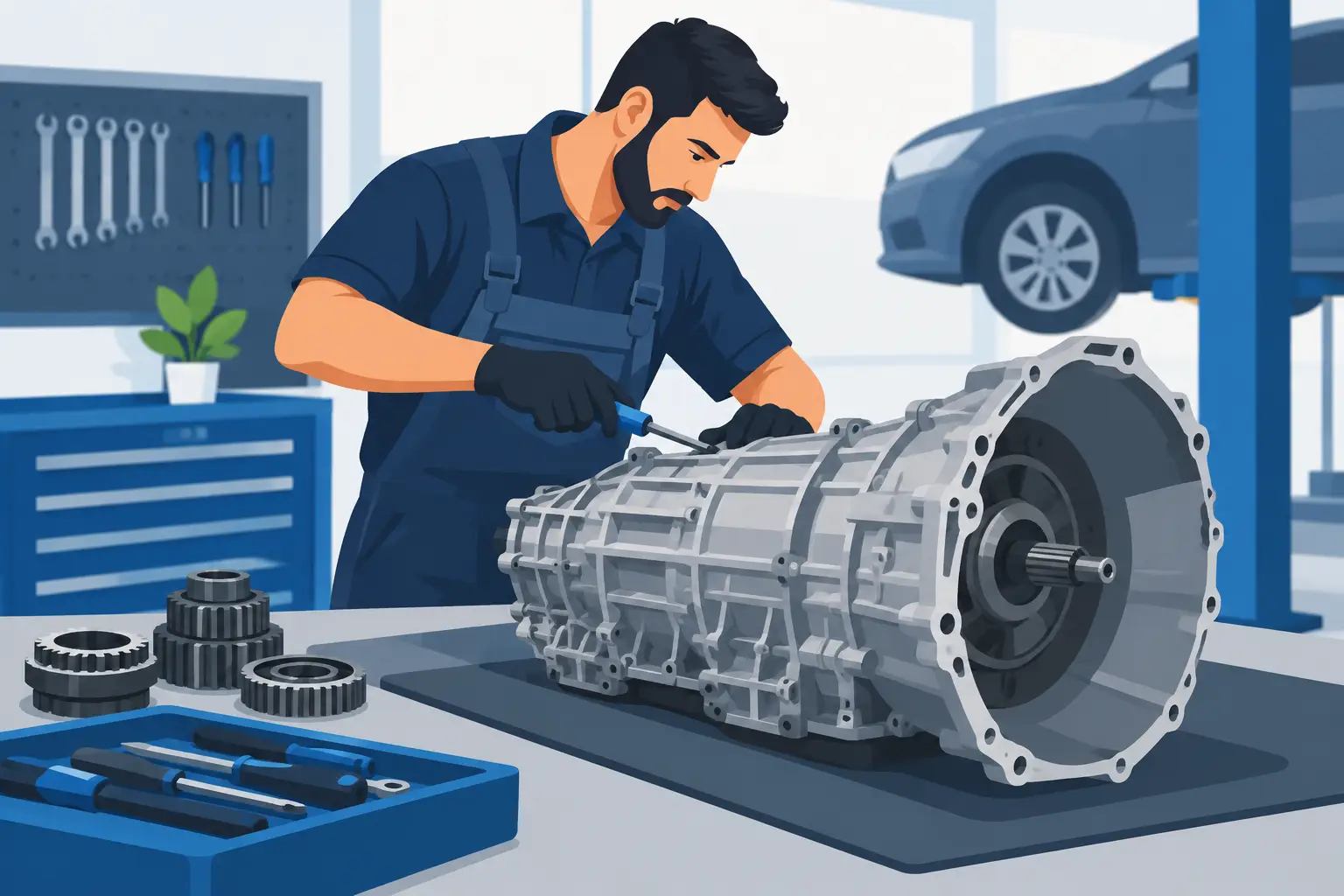
A delayed shift at a busy intersection, a flare in engine RPM on the way to work, or a puddle of red fluid in the driveway can make any driver fear the worst. But can transmissions be repaired? Often, yes. The right answer depends on the actual failed part, the condition of the transmission as a whole, and whether the problem was caught before damage spread.
Transmission trouble is stressful because the system is complex and repair costs can vary widely. That is exactly why diagnosis should come before anyone recommends a major repair. A good shop should explain what was found, what that finding means for your vehicle, and the realistic options for moving forward.
Can Transmissions Be Repaired Without Replacing Them?
Many transmission problems can be repaired without installing a replacement unit. Modern automatic, manual, CVT, and diesel truck transmissions contain numerous serviceable components. A leak, failed sensor, worn solenoid, damaged seal, valve body issue, or electrical problem may be corrected with a targeted repair.
A repair makes sense when the damage is limited and the rest of the transmission is in good condition. For example, a vehicle may shift poorly because a pressure-control solenoid is failing. Replacing that solenoid and servicing the fluid may restore proper operation if the internal clutches and gears are not damaged.
The key is avoiding assumptions. A warning light and a rough shift do not automatically mean the transmission needs to be replaced. The same symptoms can come from low fluid, contaminated fluid, a wiring issue, an engine performance problem, or a failing sensor. On the other hand, simply changing fluid will not repair burned clutches, broken hard parts, or significant internal metal debris.
Repair, Rebuild, or Replacement: What Is the Difference?
These terms are often used interchangeably, but they describe very different levels of work.
A transmission repair addresses a specific fault. It may involve replacing a seal, solenoid, sensor, wiring connector, pan gasket, cooler line, valve body component, or other identified part. This is usually the least invasive option when testing confirms the issue is limited.
A rebuild involves removing and disassembling the transmission. Worn, damaged, and failure-prone internal parts are inspected and replaced as needed. Depending on the transmission and the findings, that can include friction clutches, steels, seals, bushings, bearings, bands, pumps, valve body components, and damaged gears or shafts. An in-house rebuild allows the technician to see the condition of the unit rather than relying on a guess.
Replacement means installing another complete transmission. That may be a new unit, a remanufactured unit, or a used unit. A remanufactured transmission can be a practical choice in some cases, while a used transmission may carry more uncertainty because its maintenance and driving history are unknown. The best option depends on availability, vehicle value, budget, and the specific transmission design.
No single answer fits every vehicle. A targeted repair can save money when it is truly appropriate. A rebuild may be the more dependable choice when internal wear is widespread. An honest recommendation should include the trade-offs rather than pushing every customer toward the most expensive option.
Signs That a Transmission May Need Attention
Transmission issues rarely improve by being ignored. Getting the vehicle checked early can sometimes turn a larger repair into a smaller one. Pay attention to these common warning signs:
- Delayed engagement when shifting from Park into Drive or Reverse
- Slipping, shuddering, harsh shifting, or engine RPM rising between shifts
- Transmission fluid leaks, especially red or dark brown fluid
- A check engine light, transmission warning message, or limp-mode condition
- Burning smells, whining noises, or grinding during operation
Some symptoms are more urgent than others. If the vehicle will not move, slips badly, overheats, or makes loud grinding sounds, continued driving can cause further damage. Towing it in may be the safer and less expensive decision.
Why Accurate Diagnosis Comes First
A transmission is connected to the engine, computer system, cooling system, axles, driveshafts, and differential. That means a symptom felt during shifting is not always caused by an internal transmission failure.
A proper evaluation may include a road test, fluid inspection, scan-tool testing, checking stored trouble codes, looking for leaks, verifying electrical signals, and testing transmission line pressure when appropriate. If internal damage is suspected, the technician may inspect the pan for clutch material or metal debris. These findings help separate a manageable external problem from a unit that needs deeper work.
This process also matters for your budget. A diagnostic explanation should answer practical questions: What part has failed? Is there evidence of internal damage? What happens if you wait? Are there lower-cost and longer-term options? A clear estimate should identify the recommended repair and any related parts that need attention, such as a cooler, filter, mounts, or seals.
At Shift Right Transmissions, the goal is to explain those findings in plain language, with upfront options rather than pressure. Joey, an ASE Master Technician, and Peggy understand that most drivers are not looking for a technical lecture. They want to know what is wrong, what it will cost, and whether the repair is worth making.
When a Repair Is Usually Worth It
A repair is often worth considering when the vehicle is otherwise reliable, the engine and body are in good shape, and the transmission issue is isolated. A well-maintained vehicle with a repairable valve body, sensor, solenoid, or seal issue can have many useful miles left.
Vehicle value matters, but it is not the only factor. Replacing a familiar vehicle can bring sales tax, registration costs, financing costs, and the risk of buying someone else’s problems. For many families, retirees, and local business owners, repairing a dependable vehicle is the more sensible financial choice.
Age and mileage should be considered honestly. An older vehicle with severe rust, a failing engine, major suspension needs, and a damaged transmission may not be a good candidate for a complete overhaul. That does not mean the vehicle has no value. It means the repair decision should account for the whole vehicle, not just one system.
Transmission Fluid Service Has Limits
Fluid service is valuable preventive maintenance when performed at the right interval and with the correct fluid. Transmission fluid lubricates internal parts, helps control hydraulic pressure, and carries heat away from critical components. In Southwest Florida, high temperatures and stop-and-go driving can put added stress on fluid and cooling systems.
However, a fluid change is maintenance, not a cure-all. If a transmission is already slipping because its internal clutches are worn out, fresh fluid will not rebuild those clutches. A careful technician should not promise that a flush will solve a mechanical failure. In some cases, the vehicle manufacturer’s service procedure may call for a drain-and-fill rather than a power flush, so following the correct specification matters.
What to Ask Before Approving Transmission Work
Before approving a repair, ask what testing led to the recommendation and whether the shop found signs of internal damage. Ask whether the estimate includes fluid, filters, seals, programming, and related repairs. If there are multiple reasonable paths, ask how the short-term cost, expected reliability, and warranty coverage compare.
Extended-warranty customers should also confirm the authorization process before work begins. A repair facility that works with warranty companies can help provide the inspection details and estimate required for a claim. Shift Right Transmissions does not charge an administrative fee for extended-warranty repairs, which can make an already difficult situation a little simpler.
The best next step is not to guess based on a symptom or an internet search. Have the vehicle inspected, ask for the findings in plain language, and choose the repair option that fits both the condition of the vehicle and your plans for it.
Leave a Reply